Survival Island: Evolve Pro
- 3.6
- Rating
- 1.00M
- Installs
- $0.49
- Price

 Analysis by App-foxy
I approached Survival Island: Evolve Pro as a newcomer rather than assuming I already understood its rhythm. It is an adventure game from Not Found Games that places survival at the center of the experience, so the appeal is less about rushing through a short story and more about learning how to make sensible decisions when every early action matters. The store summary promises a harsher and more dangerous survival experience, and that description matches the general mood: progress feels earned because the environment constantly makes you think about what to do next.
The game is available for $0.49, with optional in-app purchases ranging from $0.99 to $139.99 per item. That combination is worth understanding before installing. The low entry price makes it easy to try, but the presence of optional purchases means I would not treat it as a completely cost-free experiment after the initial download. It carries an Everyone 10+ age rating, which makes it a reasonable choice for older children and adults who enjoy exploration, resource management, and a slower survival loop.
Starting on the island without feeling lost
My first recommendation is to resist the temptation to wander immediately. A survival game can make exploration feel urgent, but the opening minutes are more useful when treated as a learning period. Look at the surroundings, identify what can be interacted with, and establish a small routine before travelling farther. The first meaningful success is not covering a large distance; it is reaching a point where you can gather what you need, understand the immediate risks, and return to a familiar spot without wasting your early effort.
You May Also Like

 Blood Strike: 2.5 Anniversary
Blood Strike’s Loadouts Turn Every Drop Into a Tactical Gamble
A close look at Blood Strike’s custom loadouts: how fast access to signature weapons reshapes its battle royale rhythm, rewards preparation, and narrows the gap between fights.

 Pandora - Music & Podcasts
Pandora’s Music Is Easy to Start, but Harder to Recover
Pandora’s strength is its low-effort path from a seed to a station. Its weak spot is how much confidence it asks you to place in connection, setup, and quiet recovery.

 8 Ball Pool
 Is Built on Rivalries, Rematches, and Routine
A close look at the rivalries, rematches, shared routines, and unanswered safety questions that turn a quick pool match into a persistent mobile community.

 Samsung Music
’s Quiet Strength Is Playing What You Already Own
Its reach comes less from spectacle than from dependable access to a personal library. That simplicity is both the app’s strongest retention engine and its ceiling.

 AccuWeather: Weather Radar
AccuWeather Review: A Quick, Clear Forecast for Everyday Decisions
For everyday plans, the best forecast is the one you can understand quickly. AccuWeather makes rain timing, radar, and local conditions easy to act on, with a few trade-offs.

 Hill Climb Racing
Why Hill Climb Racing Still Turns Crashes Into One More Run
A tiny car, a bumpy hill and one more upgrade: Hill Climb Racing keeps resurfacing because its simple chaos makes every near-miss feel personal.
More From Our News Desk
View All News


That approach is especially helpful for first-time players because the game’s central challenge is decision-making. You are not simply following a sequence of obvious objectives. You are learning which actions deserve attention now and which can wait. If I spend the opening stretch collecting everything in sight, I may feel productive, but I can also lose track of the useful items and the safest route back. A smaller, deliberate collection run is easier to understand and gives the island a structure in my mind.
The game runs on devices using Android 7.0 or later, and its current version is 2.45.2. Those details matter when deciding whether an older phone or tablet is suitable. I would check the operating system before paying, particularly if the device is kept for basic everyday use and has not received recent updates. Once installed, I would also begin with a short session rather than planning a long evening, because the early experience is most valuable when I can pause and remember what I learned.
The first useful routine
I found the most reassuring way to begin is to divide the opening into three simple questions: what can help me survive immediately, where can I safely return, and what should I avoid spending too early? This keeps the island from becoming a noisy collection of possibilities. Instead of chasing every visible opportunity, I can focus on building a dependable base of knowledge. Even when a session ends without dramatic progress, I have still improved if I know a safer route or understand which actions create unnecessary risk.
A practical everyday scenario would be playing during a short break. I would start near a familiar location, make one focused gathering trip, and stop after returning with enough useful material to support the next session. This is a better fit for the game than opening it while distracted and making random decisions. Survival games punish absent-minded play more than many conventional adventure titles, and this one is more enjoyable when I give each small expedition a clear purpose.
The best early habit is to treat every trip as a planned outing, not a sightseeing tour. Before moving away, decide what you are trying to accomplish and what would make you turn back. That simple rule reduces the frustration of losing time to aimless movement. It also makes improvement visible: a successful session becomes one where I return better prepared, not necessarily one where I discover something spectacular.
How to recognize the first real success
New players sometimes measure progress by distance, but I would use a different standard. The first real success is completing a small loop without confusion. Start from a known point, gather a limited set of useful resources, learn something about the nearby area, and return with enough understanding to repeat the route. Once that feels comfortable, expand the loop gradually. This method makes the island manageable and avoids turning early mistakes into a reason to quit.
Another useful tip is to avoid making several uncertain choices at once. If you are testing a new area, do not also change your entire routine and spend everything you have gathered. Keep one part of the plan familiar. That way, if the expedition goes badly, you can identify the cause. Survival games become much less intimidating when mistakes provide information instead of becoming a jumble of unexplained setbacks.
I also recommend taking mental notes of landmarks rather than relying only on a general sense of direction. A distinctive area, a change in terrain, or a recognizable object can become a reference point for future trips. This is a small technique, but it has a large effect on confidence. The island starts to feel like a place I understand rather than a map I am constantly trying to escape.
Where new players commonly become confused
The biggest source of confusion is the difference between activity and progress. The game encourages movement and discovery, but not every action helps immediately. Collecting too much, travelling too far, or experimenting without a clear reason can leave me with less time and fewer options. When that happens, the solution is usually not to play faster. It is to simplify the next objective and return to the nearest reliable routine.
It is also easy to assume that a survival adventure should be played like a conventional action game. That comparison can lead to disappointment. If you prefer constant combat, rapid rewards, or a clearly marked path from one story moment to the next, this may feel slow and demanding. Its stronger qualities appear when I enjoy weighing risk, remembering locations, and turning a difficult environment into something familiar.
The purchase model can create another point of hesitation. The initial price is small, but optional items can cost considerably more, with individual purchases reaching $139.99. I would decide in advance whether I am comfortable with that structure and avoid treating every obstacle as a reason to buy something. The game is best approached as a survival challenge first. If the player feels pressured to spend whenever progress becomes uncomfortable, much of the satisfaction of learning the island disappears.
For that reason, I would not recommend it to someone looking for a completely predictable family game or a simple free distraction. The age rating is Everyone 10+, but suitability still depends on the player’s patience and comfort with survival pressure. A younger player may need guidance with the purchase model and with the frustration that comes from making a poor decision. An adult who enjoys methodical exploration is more likely to appreciate the tension.
How it compares with familiar adventure alternatives
Compared with a traditional adventure game, this experience places more weight on preparation and less on simply moving from one set piece to another. A conventional adventure may make the next objective obvious and protect the player from many costly errors. Here, I get more satisfaction from choosing when to explore and when to stay close to what I already know. The trade-off is that the game can feel less immediately welcoming.
It also differs from a purely casual island game. Casual alternatives often focus on relaxed discovery, decoration, or quick tasks that can be completed without much planning. This title is more appealing when I want the setting to create pressure. The island is not just a background for activities; it is the problem I am trying to understand. That makes each safe return feel more meaningful, but it also means the game is less suitable when I want something calming after a tiring day.
Against larger survival adventures, the attraction is the focused premise. I do not need to approach it expecting a huge social world or an endless list of unrelated systems. Its value comes from the direct survival loop and the way small decisions shape the next outing. Players who want a massive sandbox may eventually find the scope limiting, while players who prefer a compact challenge may find the narrower focus easier to engage with.
Making the second session more productive
After the first successful return, I would not immediately attempt the most dangerous-looking route. The better next step is to repeat the safe loop while changing one variable. Perhaps travel a little farther, test a different gathering choice, or spend more time learning the nearby terrain. This creates a controlled form of progress. I can tell whether the new plan works because the rest of the session remains familiar.
A surprisingly useful workflow is to end a session while I still know what I want to do next. Stopping at a clear decision point makes the next launch easier. I might finish by returning to a known location and deciding whether the next trip will focus on exploration or preparation. This avoids reopening the game with no plan, which is when I am most likely to waste time repeating unhelpful actions.
I would also keep my expectations realistic about the rating. The average score is 3.6 from around 12 thousand ratings, alongside 289 written reviews. I read that as a sign of a game with a recognizable audience but also some friction that will not suit everyone. The rating does not make the game a poor choice; it suggests that the survival format and its pacing deserve a personal trial rather than an automatic recommendation.
The game has passed one million installs, so it is not an obscure experiment with no player interest. Still, popularity should not be confused with universal appeal. The people most likely to enjoy it are those who like learning through mistakes and who can accept that a small, careful achievement may be more rewarding than a dramatic early breakthrough. If you want immediate clarity, you may spend more time wrestling with the format than enjoying it.
Who should try it, and who should choose something else
I would recommend it to players who enjoy adventure games with a survival mindset, especially those who like creating personal routines instead of being guided through every step. It can work well for someone who wants a game that rewards attention and patience. It is also a reasonable choice for a player who enjoys returning to the same environment and gradually reading it better each time.
I would skip it if my main goal were a fast story, effortless exploration, or a game that can be played while multitasking. The need to remember routes and make deliberate choices means that distracted sessions are likely to feel unrewarding. I would also be cautious if I strongly dislike optional purchase systems. Even though the initial cost is low, the available items introduce a spending decision that some players would rather avoid altogether.
Not Found Games has built the experience around the tension of survival rather than a purely decorative island setting. That distinction is important. I do not open it expecting a relaxed holiday simulation; I open it expecting to learn, prepare, take a risk, and accept that the island may punish poor timing. Once I understood that, the slower opening became easier to appreciate.
My recommendation after learning the rhythm
My overall view is positive but selective. Survival Island: Evolve Pro is most enjoyable when I play it patiently and give each expedition a clear purpose. The low starting price makes the experiment approachable, while the adventure format gives it more substance than a quick, disposable distraction. Its weaknesses are equally clear: the early learning curve can feel vague, progress may seem modest, and optional purchases require self-control.
If you are installing it for the first time, begin with a short session, stay close to a recognizable area, and aim for one complete return rather than a grand discovery. Once that routine feels reliable, expand carefully and let each mistake teach you something specific. That path makes the opening less intimidating and gives the game a fair chance to show its strengths.
I would recommend trying it to a friend who enjoys survival challenges and does not need constant rewards. I would not recommend it to someone seeking a guided adventure or a purely relaxing island game. For the right player, the appeal is in turning uncertainty into familiarity: the island starts as a threat, then becomes a place whose patterns you can gradually read. That is where this adventure earns its modest price and its place among mobile survival games.
FAQs for Survival Island: Evolve Pro
01What is Survival Island: Evolve Pro about?
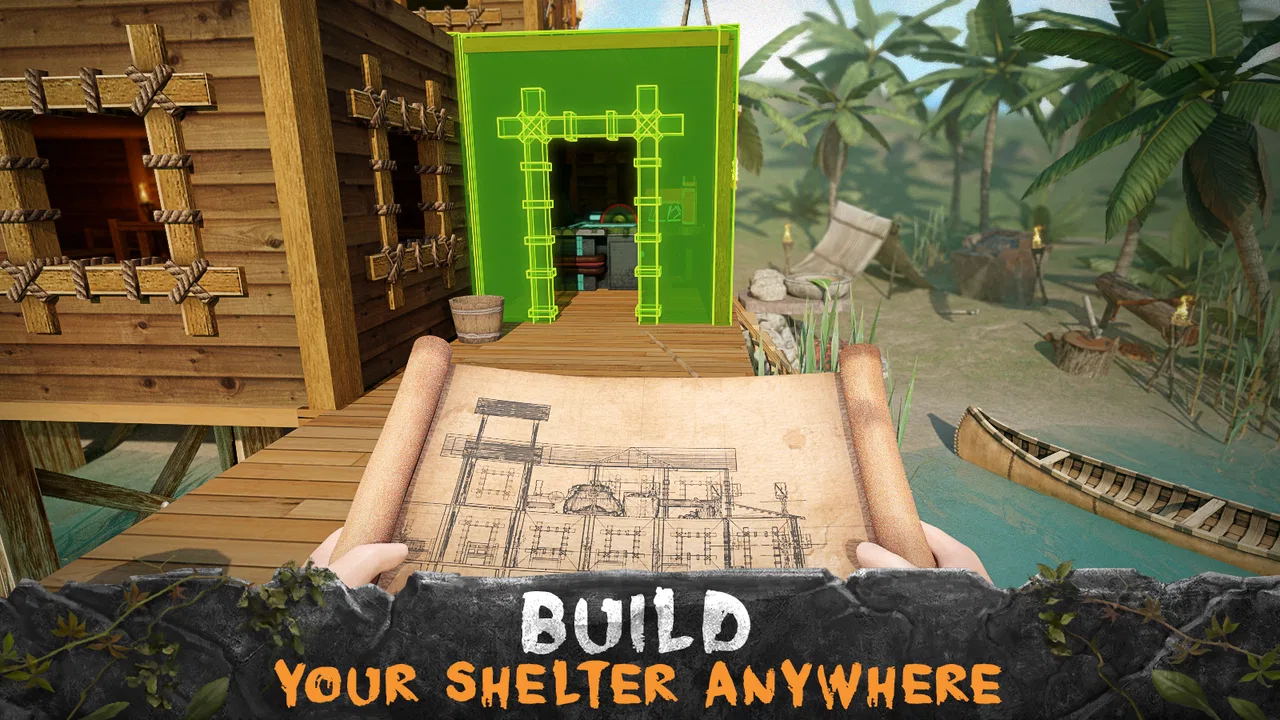
Survival Island: Evolve Pro is an open-world survival game in which you are stranded on a remote island and must gather resources, craft equipment, build shelter, hunt for food, and explore the environment. The main objective is to stay alive while discovering the island’s secrets. Progress depends on managing health, hunger, thirst, and available materials carefully.
02Can Survival Island: Evolve Pro be played offline?
The game is generally designed as a single-player experience, so many of its core survival and exploration features can be enjoyed without an active internet connection. However, connection requirements may vary depending on the version, device, advertising system, updates, or store services. It is best to launch the game once while online and check whether all features work correctly offline.
03Is Survival Island: Evolve Pro free to download and play?
Survival Island: Evolve Pro may be available as a free download, but the exact pricing and monetization model can differ between Android and iOS, as well as by region. Players should check the official store listing before installing. Depending on the release, the game may include advertisements, optional purchases, or premium elements that can affect the overall experience.
04What devices are compatible with Survival Island: Evolve Pro?
Compatibility depends on the operating system, device model, available storage, and the minimum version required by the current release. Because the game features a 3D island environment, older phones and tablets may experience slower performance, longer loading times, or reduced visual quality. Always review the official Google Play or App Store requirements before downloading.
05What should new players know before starting the game?
New players should expect a gradual survival experience rather than a fast-paced action game. Gathering basic materials, securing food and water, and creating a safe shelter should be priorities during the first in-game days. Exploring too far without preparation can be risky, so it is wise to craft essential tools, monitor your condition, and save progress whenever the game allows it.
Pros
- Crafting and building systems offer plenty of goals beyond basic survival.
- Exploration rewards curiosity with hidden resources and new locations to discover.
- Offline play makes it suitable for travel or areas with limited internet access.
- Progression feels satisfying as better tools improve gathering and island survival.
- The island setting creates a relaxing atmosphere despite its demanding survival mechanics.
Cons
- Resource gathering can become repetitive during longer play sessions.
- Some crafting recipes require considerable time and material investment.
- The survival meters may require frequent attention
- interrupting exploration.
- Limited character interaction can make the world feel somewhat empty.
- Performance may vary on older phones
- especially in larger areas.

Survival Island: Evolve Pro
Gallery